

By Polycarp
A loud explosion had lifted my vehicle. The air was covered with thick black smoke, dust and shrapnel flying in all direction. For a moment, I wasn’t sure whether I was still inside it or already somewhere beyond it. I tried to feel the soldier beside me. I wasn’t checking whether he was alive, I was confirming whether I was still alive. I needed to know that I had not crossed to the other side of eternity. My hand found him, he was there, so was I. There was a sigh of relief on my face.
It was 2016, in Gashigar, a town in Northern Borno State. We were on what should have been an administrative patrol.
That very explosion was an Improvised Explosive Device (IED). I had spent enough time in the theatre to recognize its sound. I stepped down to assess the damage. From what I could see, the vehicle could be recovered. For a little while, that was the problem I thought I was solving. However, on crossing to the other side of the vehicle, the soldiers responsible for towing the vehicle made an attempt and this triggered a secondary explosion. This explosion caused more injuries to our troops unlike the first which had affected just my vehicle.
In that confused state, firing began. The next I could see was the insurgents trying to encircle us. The explosion was a signal for them to spring their ambush. These baggers were deploying and moving back for more men.
In that moment, the problem was no longer the vehicle. It was us.
Then a senior officer looked at me and said “Bami, I am not a trained Special Forces (SF), you are the SF here, so you would have to take charge.” I wasn’t the most senior person on that patrol, he was. But suddenly, I understood something. There was nobody else. I took a deep breath and then I told myself: “Bami, if you want to stay alive, you have to take charge.” So I did.
I began giving directives for deployment immediately. Now long after the firing had stopped, these were some few things I could still remember. My soldiers were looking at me straight to my eyes. “Sir, the Doc is injured and bleeding.” “Sir, what do we do?” “Sir, what next?” They were waiting for answers at the same time they also watching me.
They were not just looking at my mouth, my face, my reaction or my composure. They were trying to understand the situation through the person standing in front of them.
Truth be told I was afraid. There is no reason to hide that now. I was afraid. But I also knew something else that If I allowed my fear to take over, it would no longer remain mine, it would spread and affect every member of the team.
So, I had to take a deep breath and tucked-in my fears in order to make sensible decisions.
Our patrol was intended to re-supply our men at the front who were already running low on ammunition and supplies. Now I have soldiers that were badly injured and needed medical attention. It was a difficult one, I had to make a decision either to continue with the patrol or to take the wounded back.
I chose the wounded. I was just positive that those at the front would be able to hold for a little longer. For those who were badly injured, however, waiting could cost them. So, we took the wounded back. Later, I was grateful that the decision gave all of them another chance at life.
My soldiers later told me they thought I was fearless. That stayed with me because they were wrong. I was not fearless, deep inside I was afraid. What they saw that day was not the absence of fear. It was a decision not to let fear decide what happened next. That distinction changed the way I understood courage.
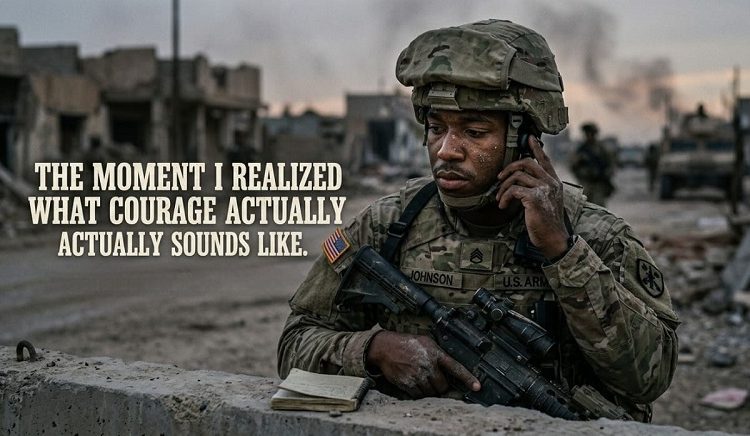
Before that day, I might have associated courage with boldness and may be confidence or maybe the ability to stand in danger without appearing shaken. But Gashigar gave me a different definition. It simply says Courage can exist in the same room as fear. Sometimes, courage is simply the moment you realize there is nobody else to wait for. You must breathe, you must stand, and you must act.
Courage can exist in the same room as fear.
Perhaps that is why the most important lesson from that day had little to do with weapons, explosions or the battlefield.
It had to do with responsibility. We often wait for the person with the title like the boss, the senior officer, the chairman, the person officially in charge. But difficult moments do not always respect hierarchy. Sometimes responsibility simply lands on whoever is standing there.
Good leadership is not always about insisting that the most senior person must lead, sometimes, it is having the humility to recognize who is best prepared for the moment. That senior officer could have held tightly to his rank. Instead, he recognized a capability he needed and handed me responsibility.
I have thought about that many times since. Because leadership is not only about taking charge, sometimes, it is knowing when to give charge to someone else.
That lesson belongs far beyond the military. A parent may be frightened while the children are watching, a teacher may walk into a difficult classroom with no perfect answer, a manager may sit across a table from a crisis that nobody planned for, a community may look around for someone to speak first. In those moments, people are rarely looking for perfection. They are looking for steadiness. They want to know: Who is going to take responsibility for what happens next?
That day in Gashigar, I thought I was just learning another survival ambush skills. I was actually learning something about myself. My soldiers saw a fearless man but I saw a frightened man taking a deep breath. I can still remember the voice that came before everything changed. “Bami, I am not an SF, you are the SF. Take charge.”
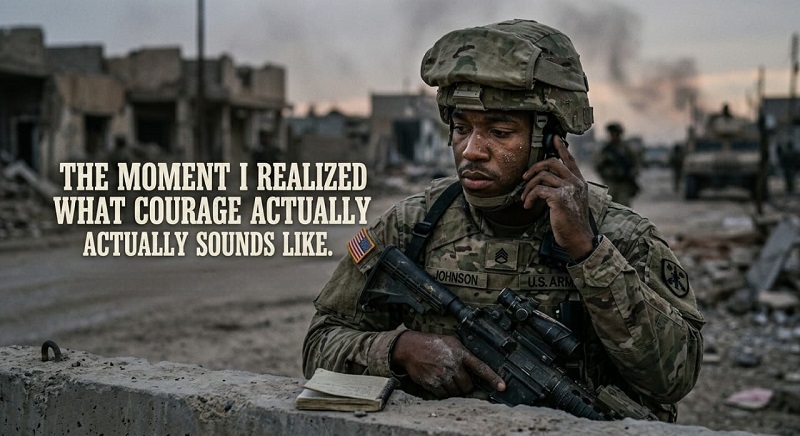
That was the first sound of courage I heard that day. The second was quieter. It came from somewhere inside me. “Bami, take charge.” And perhaps that is what courage sounds like. Not the disappearance of fear. The moment you decide to move while fear is still speaking.