
BrandsCelebritiesFashionFeatures

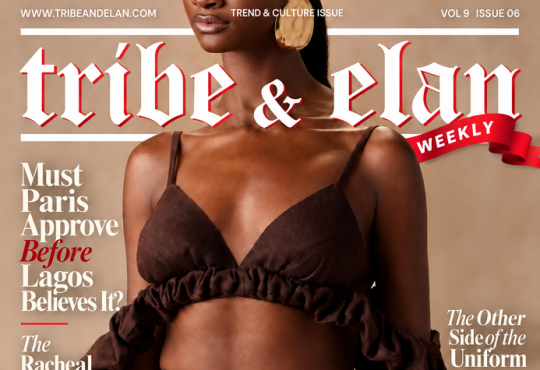
Must Paris Approve Before Lagos Believes ? The Racheal Ojuromi Story

16views

From Lagos Streets to the Grand Palais: The Dawn of a New Runway Renaissance

When 22-year-old Rachel Ojuromi reportedly stepped onto the Chanel Spring/Summer 2027 runway in Paris, she carried more than the promise of a modelling career. She carried a question that Nigerian fashion must confront: Why does global recognition so often make us see the value of what has been in front of us all along?


View this post on Instagram


A post shared by Rachel Ojuromi (@giverachelashot)

From Lagos streets, thrifted looks and self-directed fashion content to one of luxury fashion’s most recognisable stages, Racheal’s reported breakthrough challenges the traditional route to international discovery. The scout’s approval is no longer the only possible gateway. In an era of digital visibility, talent can build its own audience, tell its own story and attract attention beyond geographical borders.But perhaps the more uncomfortable question is not how Rachel got to Paris. It is why Paris still holds such power in shaping the conversation about Nigerian talent.

For decades, African models, designers and creatives have often found their achievements amplified when recognised by established Western institutions. Yet the creativity, cultural references and distinctive aesthetics that make these talents compelling are frequently nurtured at home. In Racheal’s case, her collaboration with Lagos-based stylist Debby Fasingha underscores the creative possibilities that emerge when local talent is given room to experiment and tell its own story.

Her journey also invites comparisons with Oluchi Onweagba, whose 1998 Face of Africa victory helped place Nigerian modelling talent on the international map. The pathways may differ, but the underlying question remains: how much has the industry changed if global validation is still treated as the ultimate proof of African excellence?

Racheal’s story should inspire more than congratulatory posts. It should challenge Nigerian fashion agencies to rethink talent discovery, local brands to invest in distinctive creative identities, and the media to recognise homegrown excellence before an international spotlight makes it impossible to ignore. Because visibility is powerful, but it is not the same as validation. And neither guarantees a sustainable career.

Perhaps Rachel’s most significant contribution is not simply reaching Paris. It is reminding Lagos that the next global fashion sensation could already be walking its streets, waiting not for permission, but for the right opportunity.

The question is no longer whether Paris will notice Lagos. It is whether Lagos will learn to believe in itself before Paris looks its way again.

Leave a Response